

Freeze Drying Equipment Evolution Across Industrial and Lab Applications
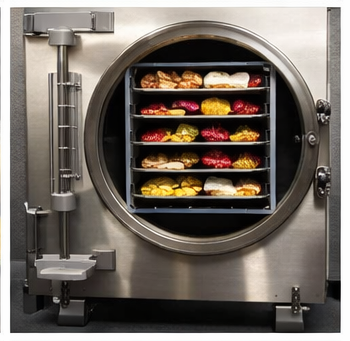
Freeze Drying Equipment: Technology Advancements and Emerging Applications
Freeze drying equipment has become a cornerstone technology across pharmaceuticals, biotechnology, food processing, and research laboratories. As industries place greater emphasis on product stability, extended shelf life, and quality preservation, freeze drying—also known as lyophilization—continues to gain traction. Recent trends show manufacturers focusing on automation, energy efficiency, and application-specific customization to meet evolving user demands.
Technological Evolution Driving Efficiency
One of the most notable trends in freeze drying equipment is the integration of advanced control systems. Modern freeze drying machines now feature PLC- and SCADA-based interfaces that allow precise monitoring of temperature, pressure, and drying cycles. This level of control reduces batch variability and improves reproducibility, which is particularly critical in pharmaceutical and biologics manufacturing.
Energy efficiency has also become a key design priority. Manufacturers are developing industrial freeze dryer systems with improved condenser performance, optimized vacuum pumps, and heat recovery mechanisms. These innovations help reduce operational costs while supporting sustainability goals. In parallel, predictive maintenance enabled by sensors and data analytics is minimizing downtime and extending equipment lifespan.
Growing Demand Across Industrial and Laboratory Settings
The pharmaceutical sector remains a primary driver for freeze drying equipment adoption, especially for vaccines, injectable drugs, and biologics that require long-term stability. Industrial-scale operations rely heavily on high-capacity industrial freeze dryer systems capable of handling large batch volumes while maintaining strict regulatory compliance.
At the same time, research institutions and biotech startups are fueling demand for smaller, flexible systems. The lab freeze dryer has become an essential tool in R&D environments, supporting applications such as protein preservation, formulation development, and material science research. Compact designs with modular components are allowing labs to scale their processes efficiently without major infrastructure changes.
For academic labs and small research facilities, the benchtop freeze dryer is gaining popularity. These systems offer ease of use, lower upfront investment, and sufficient performance for experimental and pilot-scale work. Their growing adoption reflects a broader trend toward decentralizing research capabilities while maintaining high technical standards.
Expansion and Strategic Insights
Beyond technology and applications, the market outlook for freeze drying equipment remains highly positive. Industry participants are expanding their product portfolios to address niche applications such as nutraceuticals, specialty foods, and advanced materials. Customization options—ranging from shelf configurations to software-driven process recipes—are becoming a competitive differentiator.
In terms of market size and growth trajectory, research insights indicate strong momentum. According to Grand View Research. the global freeze drying equipment market is expected to reach a valuation of approximately USD 3.50 billion by 2030, reflecting robust expansion over the forecast period. This growth outlook underscores the increasing reliance on lyophilization technologies across both established and emerging industries.
Integration of Market Outlook Into Industry Trends
This projected expansion aligns closely with broader industry developments. The steady rise in biologics production, coupled with increased investment in research infrastructure, is directly supporting demand for both industrial freeze dryer systems and advanced laboratory-scale solutions. Additionally, the food industry’s shift toward premium, minimally processed products is creating new opportunities for freeze drying machines designed for flavor and nutrient retention.
As regulatory standards tighten and end users demand higher throughput with consistent quality, equipment manufacturers are expected to continue investing in innovation. From intelligent automation to compact benchtop freeze dryer designs, the future of freeze drying equipment is defined by flexibility, precision, and scalability. Collectively, these trends position freeze drying technology as a critical enabler of product stability and performance across diverse applications.


